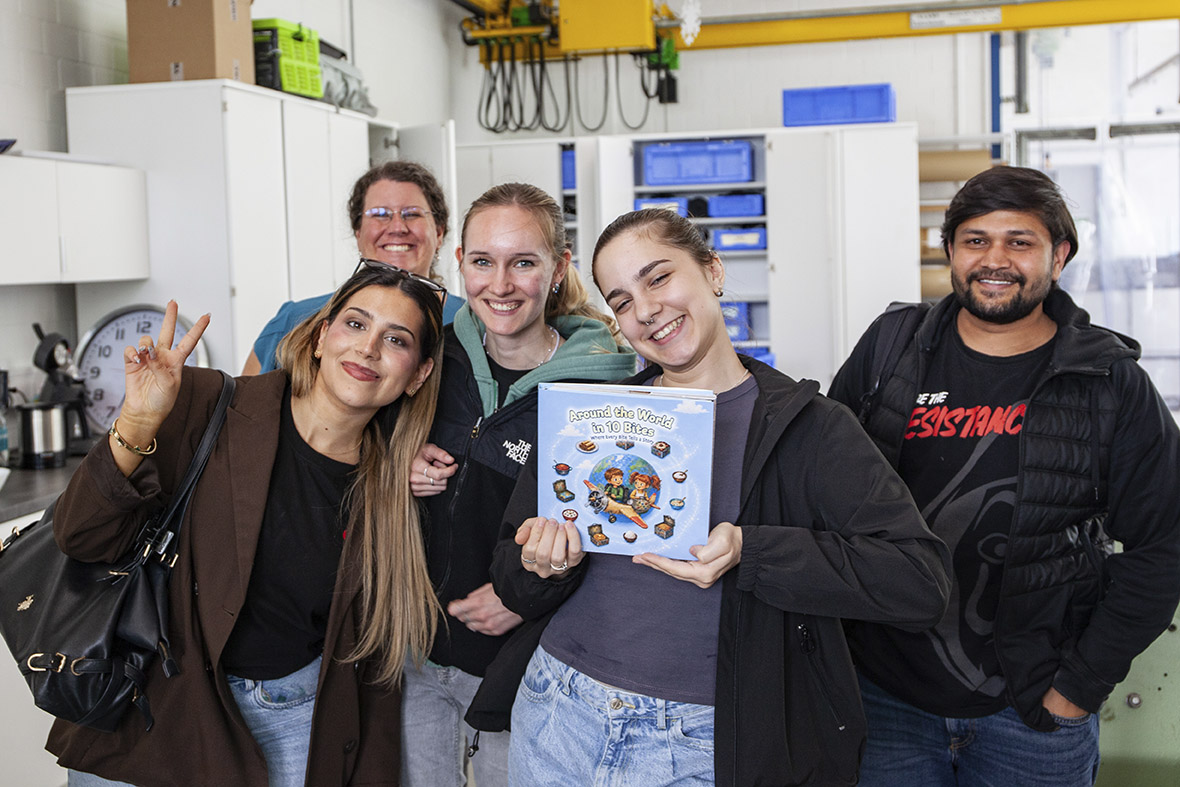
How can food bring people together? This question inspired an interdisciplinary project that accompanied our students over two semesters in our Production Development courses.
The result is a unique children’s cookbook that combines storytelling, illustration, product design, and print production. Written entirely by our students without the use of AI, the book follows the adventures of two children who discover a magical lunchbox. The enchanted lunchbox takes them on a journey around the world, where they collect recipes from children of different cultures. Along the way, they discover that while traditions may differ, the joy of sharing and preparing delicious food is something that connects children everywhere. The story concludes with a festive celebration where everyone comes together to enjoy the dishes they have prepared.
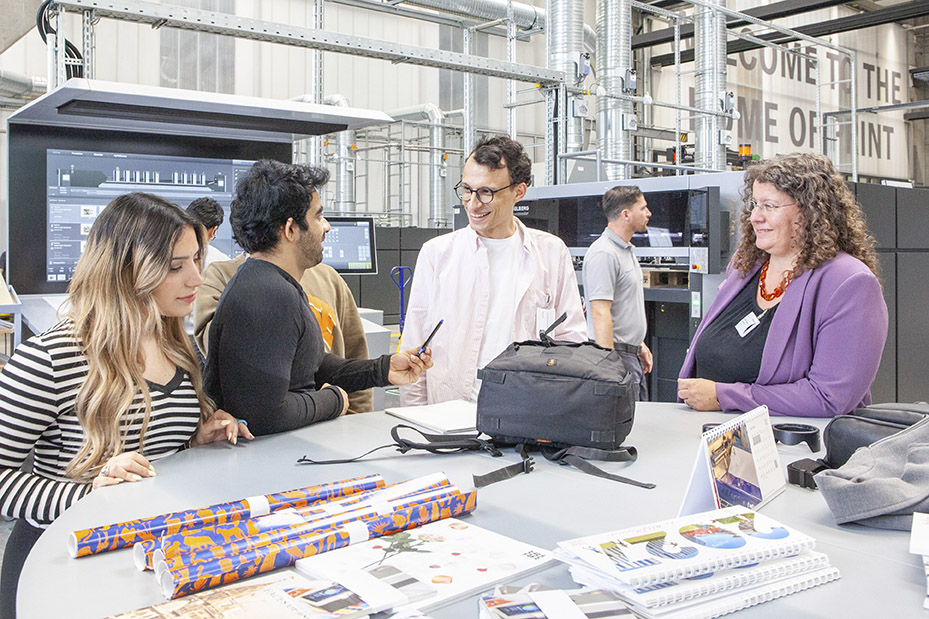
What makes this cookbook especially meaningful is that every recipe originates from one of the home countries of our students. As an international English-taught degree program, our classrooms typically bring together students from 20 to 30 different nationalities each semester. This cultural diversity is one of our greatest strengths, enriching both our academic environment and our everyday interactions. The book celebrates this diversity by transforming it into a collection of authentic family recipes and personal cultural experiences.
Beyond its narrative, the project also challenged students to develop an innovative physical product. Each recipe is presented on a removable recipe card that can be taken out while cooking, making the book both interactive and practical for young chefs and their families.
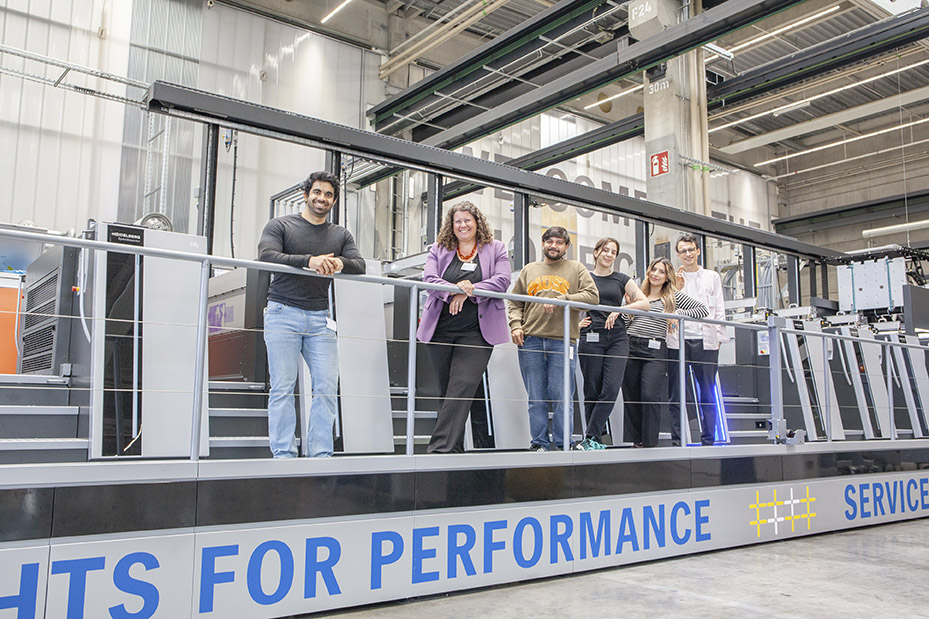
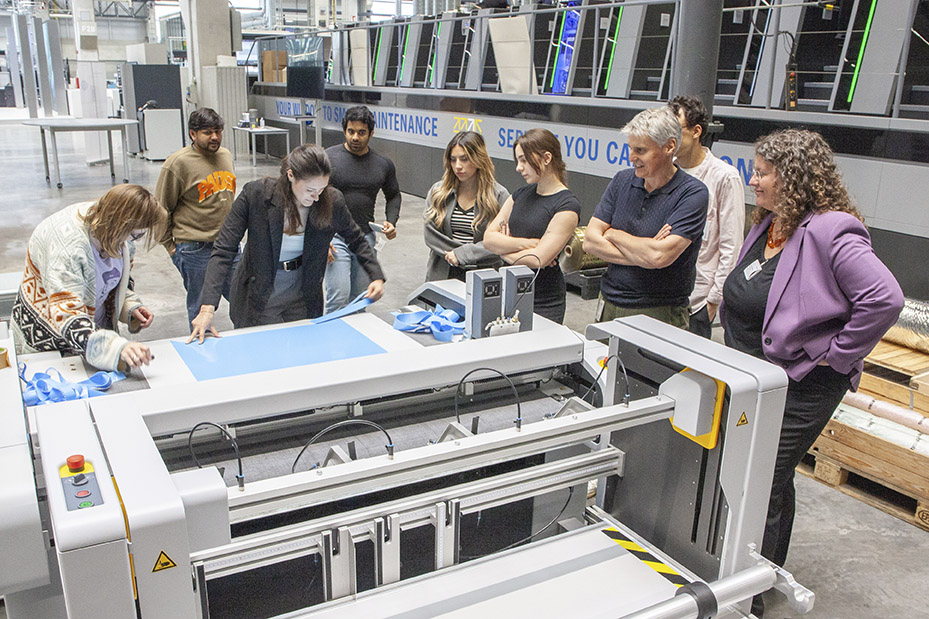
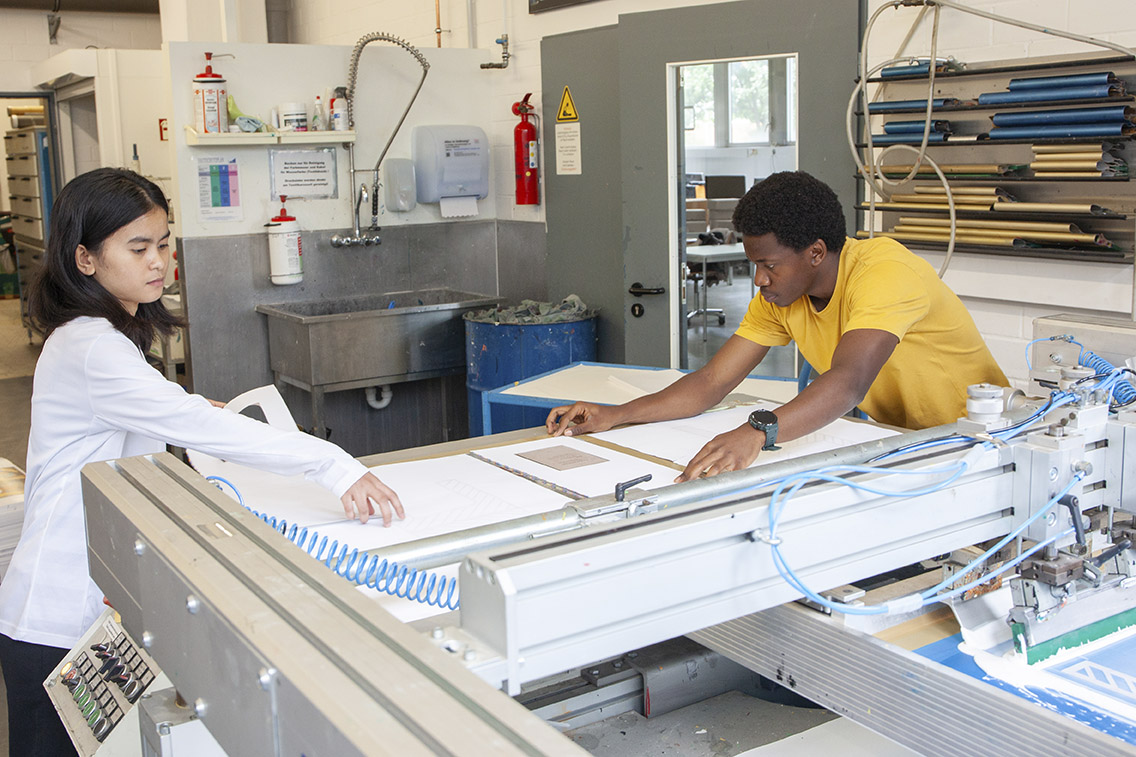
A particular technical innovation of the project was the production of the removable recipe cards. Each recipe page was constructed as a three layer assembly, with the recipe card positioned inside the final page. In collaboration with Heidelberg Druckmaschinen, the book was printed in offset, while screen printing was used to apply glue. The adhesive was deposited only in the areas surrounding the recipe card, leaving the card itself completely free from glue.
After the sheets were laminated, the pages were trimmed on all four sides. This final cut released the recipe card from the surrounding paper while the two outer layers remained securely bonded together, creating a clean pocket that holds the card in place until it is removed by the reader. This manufacturing concept eliminated the need to manually insert individual recipe cards during assembly and demonstrates how thoughtful product engineering, print technology, and production design can be combined to create an elegant and efficient solution.
From the initial concept and storytelling to editorial work, product design, illustration, prototyping, and final production, the project offered students a comprehensive insight into the complete product development process. It demonstrates how design, engineering, craftsmanship, and cultural exchange can come together to create a meaningful product that celebrates creativity, diversity, and collaboration.